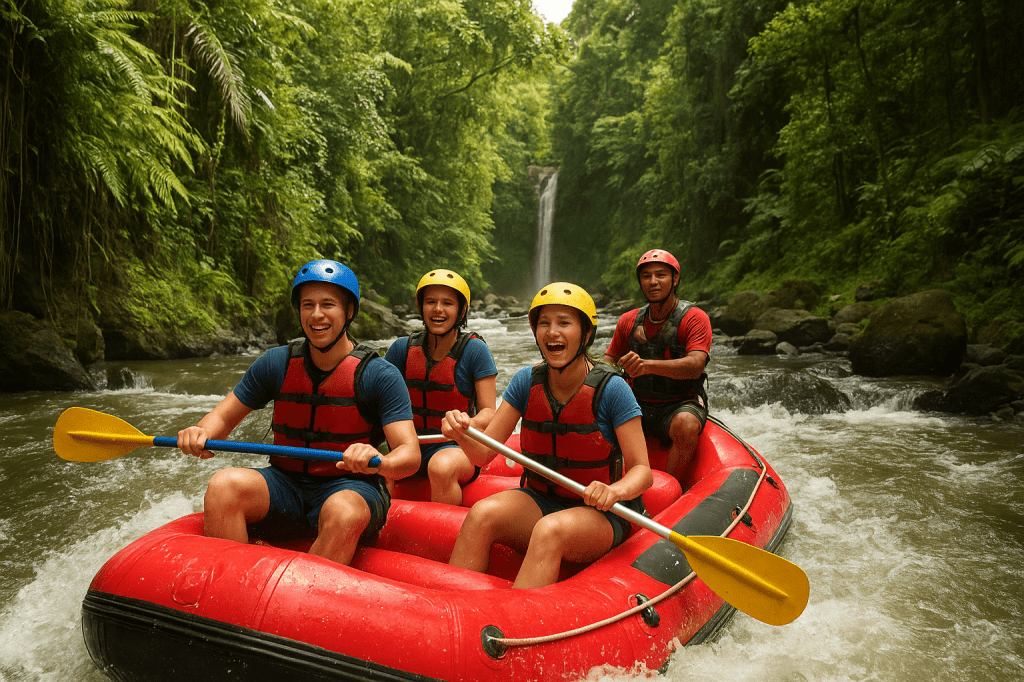
If there’s one thing that made my trip to Bali unforgettable, it was the Bali white water rafting and jungle adventure combo. Seriously, there’s something about paddling through rushing rapids surrounded by lush green cliffs that makes your heart race — in a good way. I’ve done a fair share of adventures around the world, but rafting in Ubud hits differently. It’s not just about the adrenaline (though there’s plenty of that). It’s about the entire vibe — the tropical air, the sound of the Ayung River, and the mix of calm and chaos that somehow feels perfectly balanced.
Read also: Ayung River Rafting Tours in Bali
When I first heard about Bali’s white water rafting trips, I thought it was going to be a touristy gimmick. You know, something that’s more “Instagram opportunity” than real adventure. But boy, was I wrong. Turns out, it’s one of the best ways to see the island’s hidden natural beauty — waterfalls that seem straight out of a movie, ancient stone carvings along riverbanks, and small villages tucked behind dense jungle. According to the Indonesian Ministry of Tourism and Creative Economy, Bali attracts millions of adventure travelers each year, and white water rafting has become one of the island’s top-rated outdoor activities. After doing it myself, I totally get why.
The Thrill of Bali’s Rivers — More Than Just a Splash
Let’s start with the basics — there are two main rivers where most of the white water rafting happens: Ayung River and Telaga Waja River. Both offer a completely different experience, and if you’re into outdoor thrills, you might want to try both.
Ayung River Rafting: The Scenic Route
The Ayung River, located near Ubud, is the most popular spot for first-timers or anyone who wants a balance between excitement and sightseeing. The rapids here are usually graded between Class II and III, meaning they’re fun and bouncy but not terrifying. It’s ideal if you’re going with family, a partner, or even solo but just want a mix of nature and a bit of thrill.
The best part? The surroundings. The entire rafting path cuts through deep jungle valleys, with vines hanging over the edges like curtains. There are dozens of waterfalls — some you can literally paddle under. And then there are the stone carvings — ancient reliefs carved directly into the cliffside walls. I didn’t even realize they existed until our guide pointed them out, telling stories of old Balinese legends. You can’t get that kind of storytelling from a bus tour, that’s for sure.
The Ayung trip usually takes around 2 hours, covering roughly 10 kilometers. It’s long enough to feel like an adventure but not so long that you’re exhausted. At one point, our guide let us jump into the water and float downstream — the current gently carrying us while we looked up at the towering cliffs. Honestly, it was one of those rare “wow” moments where you just pause and think, “This is Bali.”
Telaga Waja River Rafting: The Adrenaline Route
Now, if you want more of a challenge, Telaga Waja River, in the Karangasem region, is where things get wild. This river runs stronger, faster, and is typically graded between Class III and IV, depending on the season. If you visit during the wet season (November to March), expect more powerful currents and a few heart-stopping drops — including one steep 4-meter descent that comes out of nowhere and gets everyone screaming.
Unlike Ayung, Telaga Waja has fewer tourists and feels raw, almost untouched. The surrounding scenery switches between rice terraces, jungle canopies, and small village crossings where locals wave as you pass. The water is clearer too, and since it’s sourced from Mount Agung, it’s refreshingly cool. The ride here lasts about 16 kilometers, roughly 2.5 hours of non-stop paddling, laughing, and sometimes clinging for dear life. It’s physically demanding, but totally worth it if you’re chasing that rush.
A little heads-up though: this one’s not ideal if you have small kids or aren’t comfortable swimming. I’ve seen people underestimate how strong the rapids can get. Always listen to your guide — they know those rivers better than anyone.
The Jungle Adventure That Comes After
White water rafting alone is an experience, but pairing it with a Bali jungle adventure takes it to another level. Most rafting companies offer combo packages that include activities like ATV rides, ziplining, or jungle trekking. If you’re already in Ubud, it’s easy to bundle these up since most of the action is just minutes away from the riverbanks.
After rafting the Ayung, I joined a jungle trekking tour that took us through a mix of bamboo forests, coffee plantations, and small temples tucked inside the woods. The air was humid but refreshing, and the smell of wet earth after the rain was intoxicating. I even got to try Luwak coffee right at a plantation — the one made from civet-processed beans. I know, it sounds weird, but it’s surprisingly smooth.
Some tours even include a swing experience, where you’re strapped into a giant swing that arcs out over the rice fields. It’s touristy, sure, but if you time it right (early morning or late afternoon), it’s magical. The sunlight hits the paddies just right, and the whole place glows gold.
Choosing the Right Adventure Package in Bali
If you’re planning your own Bali white water rafting and jungle adventure, picking the right package can make a big difference. There are tons of operators — from budget-friendly to luxury — and while most follow similar routes, the experience varies a lot depending on the company.
From what I’ve seen and heard, the more established operators like Sobek Rafting, Mason Adventures, and Bali Adventure Rafting offer top-notch safety gear, professional guides, and clean facilities. They usually include hotel pickup, lunch, towels, and showers (which you’ll definitely need after). Prices range from IDR 400,000 to 900,000 per person (roughly $25–$60 USD), depending on what’s included.
Budget options might look tempting online, but I’d say be careful. I once went with a cheaper outfit that cut corners — helmets that didn’t fit properly, life jackets that had seen better days, and guides who seemed more interested in finishing early than keeping everyone safe. Spend a bit more; it’s worth it.
If you’re looking for something more exclusive, some resorts and adventure companies even offer private rafting experiences, where it’s just your group and the guide. It’s quieter and feels more personal, perfect for couples or small families.
What to Expect During a Typical Rafting Day
A typical rafting trip in Bali usually starts early. Most operators pick you up between 8–9 AM depending on where you’re staying. The drive to the starting point (especially if you’re coming from Seminyak or Canggu) can take about 1.5 hours, but the views make it go by quickly — rice fields, temples, and the occasional monkey hanging out on roadside trees.
Once you arrive, you’ll get a quick briefing. The guides explain how to paddle, what to do if you fall out (which sounds scary but is actually manageable), and basic commands like “forward,” “stop,” or “boom-boom” — that’s what they yell before hitting big rapids. Then comes the part that everyone underestimates: the walk down to the river. It’s usually a few hundred steps, and yes, you’ll feel it in your legs. But once you’re in the raft, it’s pure joy.
Most tours include a halfway stop for photos or a short rest near a waterfall. Some guides are absolute characters — cracking jokes, splashing rival rafts, and pulling small pranks. It adds to the fun, and honestly, it’s what makes each trip unique.
After finishing, you’ll usually have to hike back up (sometimes 300+ steps — I wasn’t ready for that the first time), but there’s cold water and a buffet lunch waiting at the top. Local dishes like nasi goreng, mie goreng, or satay are standard, and after that workout, everything tastes incredible.
When’s the Best Time for White Water Rafting in Bali?
Timing matters a lot. Bali’s rivers change dramatically with the seasons, so picking the right time ensures you get the experience you want.
- Dry Season (April to October): The water levels are lower, making it safer for beginners. The rapids are calmer, and the weather’s perfect for combining rafting with trekking or ATV rides.
- Wet Season (November to March): This is when things get exciting.
The rivers swell, the rapids become stronger, and the scenery — all that lush greenery — comes alive. If you’re after more adrenaline, go during this period. Just expect to get soaked (like, completely drenched).
I’ve done rafting in both seasons, and honestly, each has its charm. During the dry months, you get crystal-clear views and a more relaxed pace. During the wet season, it’s wild — but in a good way.
What to Pack and Wear for a Bali White Water Rafting Trip
Over the years, I’ve learned the hard way that what you wear on these trips can make or break your comfort. Here’s what works best:
- Quick-dry clothes: Avoid cotton — it gets heavy when wet. Opt for sportswear or swim gear.
- Secure footwear: Water shoes or strap-on sandals. Flip-flops are a big no.
- Change of clothes: You’ll need them after. Most tour bases have changing rooms.
- Waterproof bag or pouch: For phones and valuables. Some companies provide dry bags, but I always bring my own just in case.
- Sunscreen: Even though you’re in water, Bali’s sun is relentless.
- Small cash: For drinks, tips, or those awesome post-ride photos.
Also, if you wear glasses or a GoPro, make sure they’re strapped tight. I lost a pair of sunglasses once mid-rapid — watched them float away like a dramatic movie moment.
Is White Water Rafting in Bali Safe?
This is probably the number one question I get asked. The short answer: Yes, it’s very safe — if you go with reputable operators.
Bali’s rafting industry is well-regulated, and guides go through training and certification. Most companies provide helmets, life jackets, and insurance. Accidents are rare, and guides are skilled at navigating even the trickier rapids.
That said, safety also depends on you. Listen to instructions, don’t try to stand up in moving water, and avoid rafting during extreme weather. If you’re unsure, just ask the guide — they’ll tell you if conditions aren’t ideal that day.
According to data from the Bali Tourism Board, over 200,000 tourists participate in rafting activities annually with minimal incident reports. So yeah, the odds are in your favor.
Why Ubud Is the Perfect Base for This Adventure
If you’re planning a Bali white water rafting and jungle adventure, Ubud is hands-down the best place to stay. It’s central, close to both the Ayung River and most jungle tours, and it offers that perfect mix of nature and comfort. You can wake up in a cozy villa surrounded by rice paddies, hit the river by mid-morning, and be back for a relaxing massage by sunset.
What I love most about Ubud is how seamlessly the adventure scene blends with the cultural vibe. You can spend one day rafting through rapids and the next day exploring temples or visiting the Tegallalang Rice Terraces. Everything’s within reach, and it never feels rushed.
Plus, Ubud’s food scene is incredible. After a day of rafting, nothing beats a hearty meal at Warung Biah Biah or a smoothie bowl at Alchemy. Some rafting companies even offer post-adventure dinners with local dishes cooked by Balinese families. It’s a small touch that makes a big difference.
Sustainability and Respect for Nature
One thing that often gets overlooked when talking about rafting is the environmental side. The rivers in Bali are not just tourist attractions — they’re vital ecosystems and sources of life for the surrounding communities. Many local rafting companies now emphasize eco-friendly practices, like collecting trash along the river, avoiding single-use plastics, and supporting reforestation programs.
When I last went rafting, our guide mentioned how they regularly help clean the riverbanks after big storms. It reminded me that enjoying nature comes with responsibility. The best adventure isn’t just about the thrill — it’s about leaving the place better than you found it.
If you’re booking your trip, try choosing operators that are part of sustainability initiatives or have eco-certifications. They might charge a little more, but you’ll be supporting businesses that care about the island’s future.
Combining Rafting with Other Adventures in Bali
If you’ve got extra days in your itinerary, you can easily turn your Bali white water rafting and jungle adventure into a multi-day thrill fest. Some great add-ons:
- Mount Batur Sunrise Trekking: Start early, hike up a volcano, and catch the sunrise from above the clouds. Then reward yourself with a rafting trip the next day.
- ATV Jungle Ride: Tear through muddy paths, small rivers, and dense forest trails. It’s messy, loud, and ridiculously fun.
- Monkey Forest Visit: While you’re in Ubud, stop by the famous Sacred Monkey Forest Sanctuary. Just hold onto your stuff — those monkeys have sticky fingers.
- Tegallalang Rice Terrace Walk: A calmer contrast to rafting, but equally breathtaking. The view at sunrise? Unreal.
- Tegenungan Waterfall: Perfect for a quick dip or some epic photos after your rafting session.
Bali makes it easy to mix chill and thrill — one day you’re rafting wild rapids, the next you’re sipping coconuts by the beach in Sanur. That’s the beauty of this island.
Real Talk: What It Actually Feels Like
I won’t lie — the first few minutes on the raft, I was nervous. The guide yelled commands, the raft bounced, and water splashed everywhere. But then it clicked. You start syncing with your crew, the rhythm of paddling feels natural, and suddenly you’re laughing, soaked, and fully present. No phone, no distractions, just raw fun.
One of my favorite memories was near the end of the Ayung River route. We drifted into a calm section where sunlight filtered through the trees, and all you could hear was the water trickling over rocks. Our guide told us to stop paddling and just listen. It was quiet — the good kind of quiet that makes you realize how alive nature is. Those are the moments that stick.
If you’re an adrenaline junkie, Telaga Waja will feed your need for speed. But if you’re after something scenic and soulful, Ayung’s your best bet. Either way, you’ll come out smiling (and probably a little sore).
The Local Touch That Makes It Special
Something I really appreciate about Bali’s adventure scene is how local it remains. Most rafting guides are from nearby villages. They grew up around those rivers — fishing, swimming, exploring — so they know every bend and drop. Their humor, warmth, and storytelling make the experience feel personal.
I remember one guide, Wayan, who told us about the river spirits and why they always do a small offering before launching the raft. It’s part superstition, part respect. He said, “If you respect the river, the river respects you.” That line stuck with me. It’s simple but sums up the Balinese connection with nature perfectly.
How to Book and What to Look Out For
You can easily book rafting and jungle tours online through platforms like GetYourGuide, Klook, or directly with local operators. Most allow flexible rescheduling, which helps if the weather changes. Just make sure to check recent reviews — some companies look great on paper but cut corners in real life.
Also, confirm if the package includes insurance and hotel transfers. Some operators offer “all-inclusive” deals that cover everything from pickup to lunch, which makes logistics a breeze.
If you prefer a more spontaneous approach, you can also book once you’re in Ubud. There are dozens of tour desks and local agents offering same-day trips. Just negotiate politely; bargaining is part of the culture here, and you can usually get a better rate.
A Few Honest Takeaways
After several rounds of rafting in Bali, here’s what I’ve learned:
- Don’t overpack your day. Rafting alone takes a lot of energy. Pair it with one more activity, max.
- Go early. Morning trips are cooler, less crowded, and have better lighting for photos.
- Eat light before you go. Trust me, a full breakfast and bumpy rapids don’t mix well.
- Be ready to laugh. Even if you fall out (which happens more often than you’d think), it’s part of the fun.
- Tip your guide. They work hard and deserve it.
If you’re sitting there debating whether a Bali white water rafting and jungle adventure is worth it, take my word for it — go for it. It’s one of those experiences that sticks with you long after the tan fades. You’ll come back with wild stories, new friends, and maybe even a fresh perspective on what adventure really means.
And who knows? You might just find yourself signing up for round two the next day — because once you’ve danced with Bali’s rivers, it’s hard not to crave another ride.
 Bali Tourism