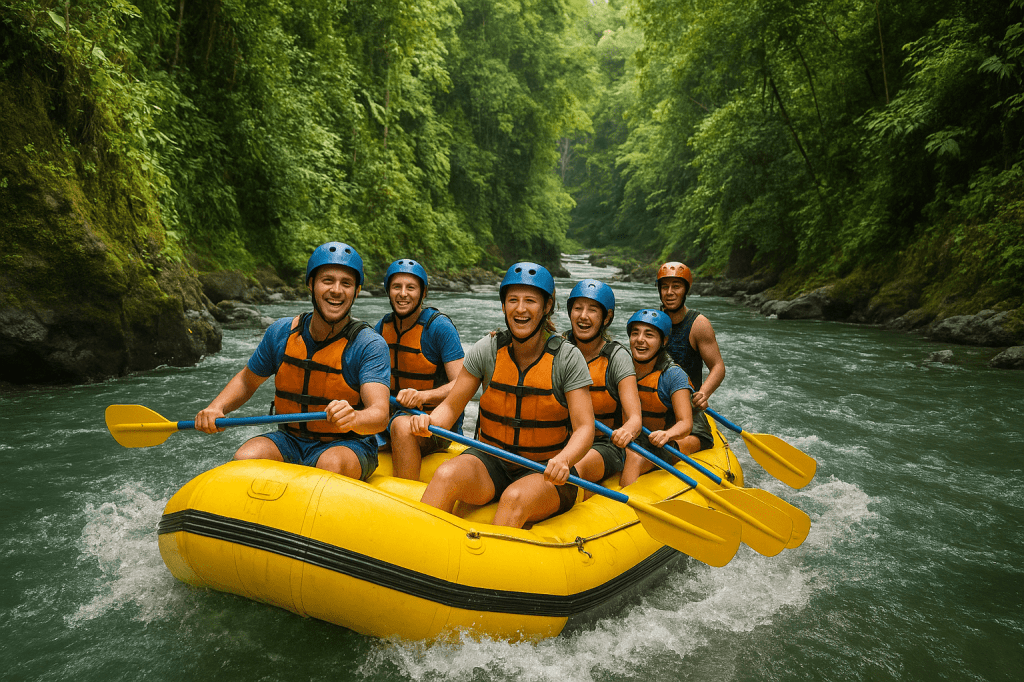
If you’ve been searching for something that mixes nature, culture, and a good splash of adrenaline, Ayung River rafting tours in Bali are where the fun begins. I’m not saying this just because I love adventure travel—I’ve seen countless visitors light up after they come back from this experience, dripping wet but grinning ear to ear. The Ayung isn’t just some random river. It’s one of Bali’s longest rivers, flowing through lush rainforests, quiet villages, and valleys lined with carvings that make you stop paddling just to stare.
Now, rafting can sound intimidating if you’ve never done it. I get it. I was nervous the first time too—holding the paddle so tight you’d think it was glued to my hands. But the thing with Ayung is, it’s beginner-friendly. You get the thrill of rapids, yes, but not the kind that flips your raft upside down and leaves you questioning your life choices. It’s more of a “laugh while you get splashed” type of adventure. That balance is why it’s become Bali’s most popular rafting spot, and honestly, it deserves the hype.
Read also: Bali Weather in December
Why Ayung River Is the Go-To Spot for Rafting in Bali
Ayung River flows near Ubud, which is already famous for its artsy vibe, temples, and rice terraces. So, you’re not just signing up for rafting—you’re mixing it with the cultural heart of Bali. The river itself stretches around 75 kilometers, but the part used for rafting tours is about 10 to 12 kilometers long. That usually takes two hours to cover, depending on how much time your group spends joking around or stopping for photos.
The surroundings? Unreal. You’ll paddle through deep gorges shaded by tropical trees, past waterfalls that feel like secret hideouts, and beside stone carvings on the cliffs that tell stories from Balinese mythology. I remember one guide explaining the carvings as we floated by—something about good and evil forces. I probably only understood half of it, but standing in a raft, listening to those tales with the jungle echoing around you? That’s unforgettable.
What the Rafting Experience Actually Feels Like
Let me break down what a typical tour looks like, so you know what to expect.
First off, there’s usually a bit of a walk down to the river. And by “walk,” I mean steps. Lots of steps. The first time, I counted about 300 on the way down, and yes, your legs will remind you of them later. But here’s the thing—you’ll forget the burn as soon as the raft hits the water.
The rapids on the Ayung are mostly classified as Grade II and III. Translation: they’re exciting enough to give you a rush, but not so wild that you need to be a pro. The raft bounces, spins a little, and sometimes you get splashed straight in the face. Half the fun is laughing at your friends when they scream at a wave that looks scarier than it really is.
About halfway, most tours stop at a rest point. Sometimes it’s by a little waterfall, where everyone takes turns standing under the water like it’s a natural shower. Other times, guides point out wildlife—like colorful kingfishers or even monkeys swinging through the trees. And yes, there’s usually time for selfies. Lots of them.
Safety and Comfort—Because Nobody Wants Drama on Vacation
Whenever I talk to people about rafting, their first question is usually: “Is it safe?” Short answer: yes. The operators here take safety seriously. Life jackets, helmets, and trained guides are all part of the deal. Before you even step into the raft, there’s a short safety briefing. I used to roll my eyes at these, but honestly, they’re worth paying attention to. Things like how to hold the paddle, what to do if you fall in (rare, but it happens), and how to listen for commands.
I’ve been rafting the Ayung multiple times, and I’ve never seen anyone get hurt—unless you count pride when someone topples out in calm water. And don’t stress if you’re not a strong swimmer. The gear keeps you afloat, and the guides are pros at pulling people back in.
Comfort-wise, expect to get wet. Your clothes will be soaked through, so wear quick-dry stuff and bring a change for afterward. Some companies provide lockers, towels, and even hot showers, which feels heavenly after a couple of hours in the river.
Cost of Ayung River Rafting Tours in Bali
Prices vary depending on the operator and what’s included. On average, you’re looking at somewhere between 300,000 to 600,000 IDR per person (roughly $20–40 USD). That usually covers hotel transfers, safety equipment, a guide, the rafting session, and lunch. Some packages even throw in extras like welcome drinks or photo services.
I once went with a budget option that skipped the buffet lunch, and let me tell you—it was a mistake. After rafting, you’ll be starving, and having a hot meal with views of rice fields is part of the fun. So, my advice? Pay a little more for the full package. It’s worth it.
Best Time to Do It
Timing makes a difference. The river is open year-round, but conditions shift with the seasons.
- Dry season (April–September): The water level is lower, making the rapids gentler. Great for families or first-timers.
- Wet season (October–March): The river gets fuller, the rapids pick up speed, and the whole thing feels more intense. Perfect if you want more thrill.
Morning sessions are usually calmer and less crowded. Afternoons can get busy, but they also have this magical golden light filtering through the jungle, which makes everything feel cinematic. Personally, I lean toward mornings—fresher energy, cooler air, and you still have the rest of the day to explore Ubud.
Who Can Join Ayung River Rafting
The tours are surprisingly inclusive. Kids as young as 7 can join (with parental supervision), and I’ve seen folks in their 60s having the time of their lives. You don’t need special fitness, just a basic ability to walk down to the river and hold a paddle.
That said, if you’ve got serious health concerns—like heart issues or back problems—it’s probably best to skip. Always check with the operator if you’re unsure.
Why It’s More Than Just Rafting
This is the part people don’t always talk about. Sure, rafting is fun. But Ayung River rafting also connects you to Bali in a way that feels deeper. You’re moving through landscapes that locals consider sacred, hearing myths tied to carvings on the cliffs, and sharing laughs with Balinese guides who know the river like the back of their hands.
According to Indonesia’s Ministry of Tourism and Creative Economy, community-based tourism has become a key driver of sustainable travel in Bali, and rafting on rivers like the Ayung directly supports local jobs—from guides to cooks preparing those buffet lunches. So, when you book a tour, you’re not just buying an adventure; you’re helping families and villages thrive.
Tips That Make the Day Smoother
- Bring sandals or water shoes that won’t slip off. Flip-flops are a disaster waiting to happen.
- Don’t bother with heavy cameras. Most companies have waterproof bags, but honestly, your phone in a waterproof case works fine.
- Wear sunscreen, even if it’s cloudy. The reflection off the water can sneak up on you.
- Pack a dry change of clothes for afterward—you’ll thank me when you’re not sitting in wet shorts during lunch.
I’ve learned these the hard way—like the time I wore cotton shorts, and they stayed damp the entire ride back to my hotel. Not fun.
Comparing Ayung River Rafting with Other Bali Rivers
Here’s where a lot of travelers get confused. Bali has three main rafting spots: Ayung River, Telaga Waja River, and Melangit River. Each has its own vibe, and knowing the difference helps you choose the right one.
Ayung River is hands down the most popular, mostly because it’s so close to Ubud. It’s the “entry-level” adventure—great for families, beginners, and anyone who wants a mix of fun and scenery without feeling like they’ve signed up for a military obstacle course.
Telaga Waja, on the other hand, is longer and wilder. The rapids there are mostly Grade III and IV, which means faster drops and a lot more paddling. I did Telaga Waja once after a few Ayung trips, and it felt like stepping up a level—still fun, but definitely more intense. Plus, you have to tackle a 4-meter dam slide at one point. Not everyone’s cup of tea, but adrenaline junkies love it.
Then there’s Melangit, the underdog. It’s shorter but super narrow, with sharp turns that keep you on your toes. Honestly, it feels more raw and untouched. But it’s not as tourist-friendly, so fewer companies operate there.
So, if I had to sum it up? Ayung is perfect for first-timers or folks who want the “classic Bali rafting” experience. Telaga Waja is for thrill-seekers. Melangit is for people who want something quieter and more offbeat.
Stories from Travelers (Because Reviews Speak Louder)
I can’t tell you how many times I’ve seen people walk into rafting tours looking hesitant, only to leave raving about it. Like the family from Australia I joined one summer—two parents, three kids, all under 12. The mom kept saying she was nervous, but halfway through, she was laughing louder than the kids. By the end, the kids were begging to go again.
Then there was a couple from Germany who had never rafted before. They were celebrating their honeymoon, and the guide spent the whole trip calling them “King and Queen of the River.” Everyone in the raft was joking along, and when the raft hit a bump that nearly tossed us all in, the guide teased, “Long life, long marriage—strong paddling!” It was one of those moments that turned strangers into friends.
I even remember going once during the wet season when the water level was high. The rapids were rougher, and our raft spun so fast we ended up backwards at one point. Instead of panicking, the guide shouted, “Relax, reverse is bonus ride!” Everyone burst out laughing. That’s the thing about Ayung—it’s not just rafting, it’s this whole atmosphere of fun.
A Cultural Touch You Don’t Expect
What makes Ayung different from rivers elsewhere in the world is the cultural backdrop. The cliffs lining parts of the river are decorated with huge bas-relief carvings. These aren’t random doodles—they were done by local artists back in the 1990s, telling stories from the Ramayana (a famous Hindu epic). Imagine paddling through a jungle canyon and suddenly seeing a wall of stone figures telling tales of gods and battles.
Another thing: many villagers along the river still use it for daily life. You might spot women washing clothes or kids playing by the banks. It’s a reminder that you’re not just floating through a tourist playground—you’re in a living, breathing part of Bali.
And let’s not forget the guides themselves. Most of them grew up in villages near the river. They’ll crack jokes, but also slip in stories about Balinese rituals, farming traditions, or even rice terrace irrigation systems. One guide once explained how water temples help manage the flow for farmers downstream—it was like getting a mini cultural lecture while paddling.
What to Pack for Ayung River Rafting
Let me save you the headache of showing up unprepared. Here’s what actually works:
- Clothing: Quick-dry shorts, a t-shirt or rash guard, and a swimsuit underneath. Avoid jeans or heavy fabrics—they’ll weigh you down.
- Shoes: Sports sandals or river shoes. Sneakers get soggy and gross. Barefoot? Bad idea.
- Waterproof case for your phone: Some operators rent them out, but they’re not always the best quality. Bring your own if you want to keep your photos safe.
- Change of clothes: Pack them in a plastic bag, so you’re not stuck putting wet stuff in your backpack.
- Cash: For tips or buying drinks afterward. Guides don’t push it, but it’s a nice gesture.
Optional but useful: insect repellent, a small towel, and maybe a dry bag if you want to bring snacks or a GoPro.
The Post-Rafting Reward
Honestly, one of my favorite parts of the tour isn’t even the rafting—it’s what comes after. Most operators serve up a buffet lunch overlooking rice fields or jungle views. Think fried noodles, satay, tropical fruits, and sometimes banana fritters. After a couple of hours paddling and laughing, you’ll devour that food like you haven’t eaten in days.
The hot showers also feel like a blessing. Standing there rinsing off the river water, surrounded by jungle sounds, you can’t help but feel grateful. It’s one of those experiences where the adventure and relaxation blend perfectly.
Why It’s Worth Adding to Your Bali Itinerary
Here’s the thing: Bali has beaches, temples, yoga retreats—you name it. But rafting on the Ayung River gives you something different. It’s an active way to see Bali’s nature, it’s cultural, it’s social, and it’s just plain fun. Even if you’re not usually the adventurous type, it’s the kind of activity that surprises you in the best way.
And unlike surfing (which can take days to get the hang of), rafting is instant gratification. Within minutes, you’re in the flow of it—laughing, splashing, and soaking up the jungle scenery. For travelers trying to make the most out of their trip, Ayung River rafting tours tick so many boxes at once.
 Bali Tourism